Description
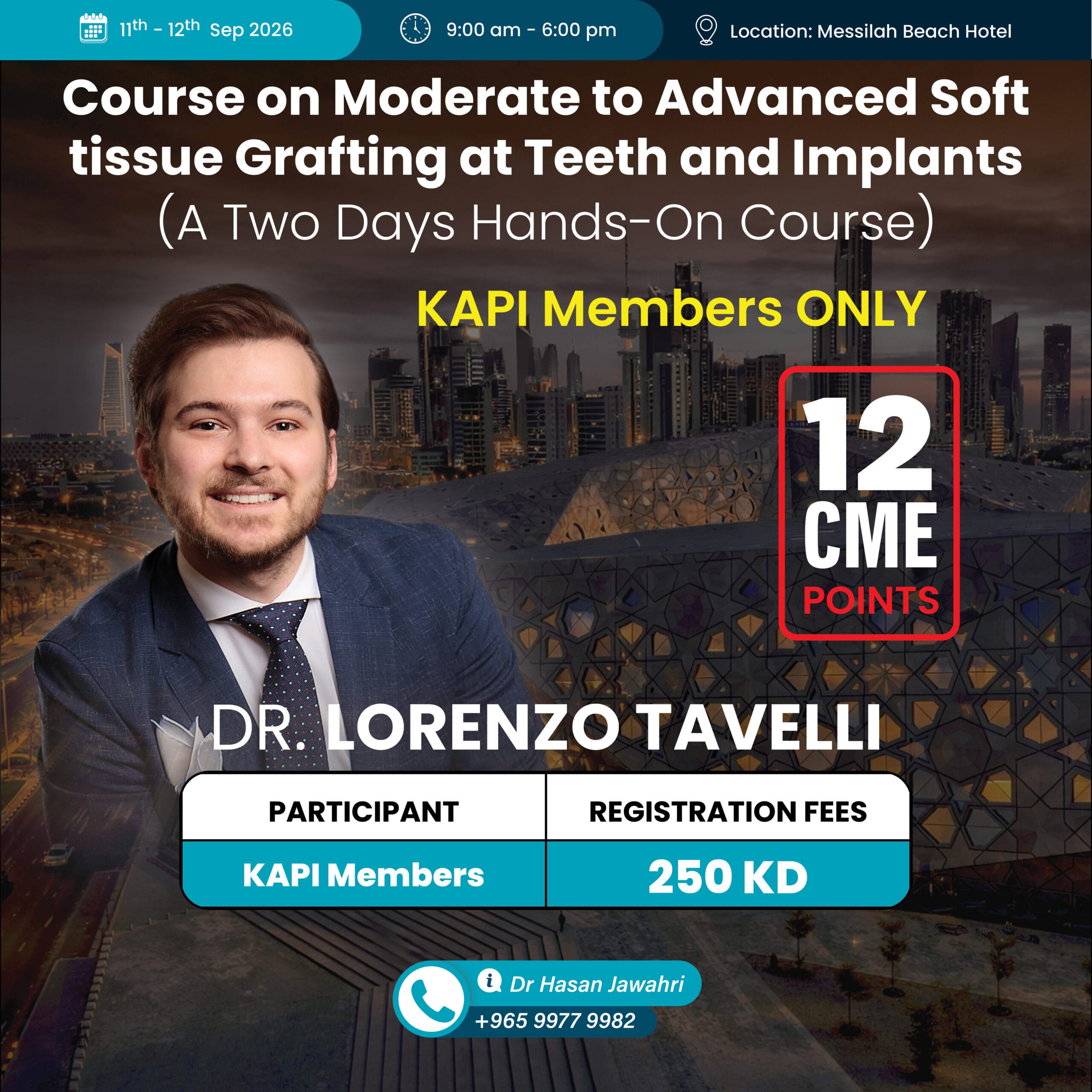
DR. LORENZO TAVELLI
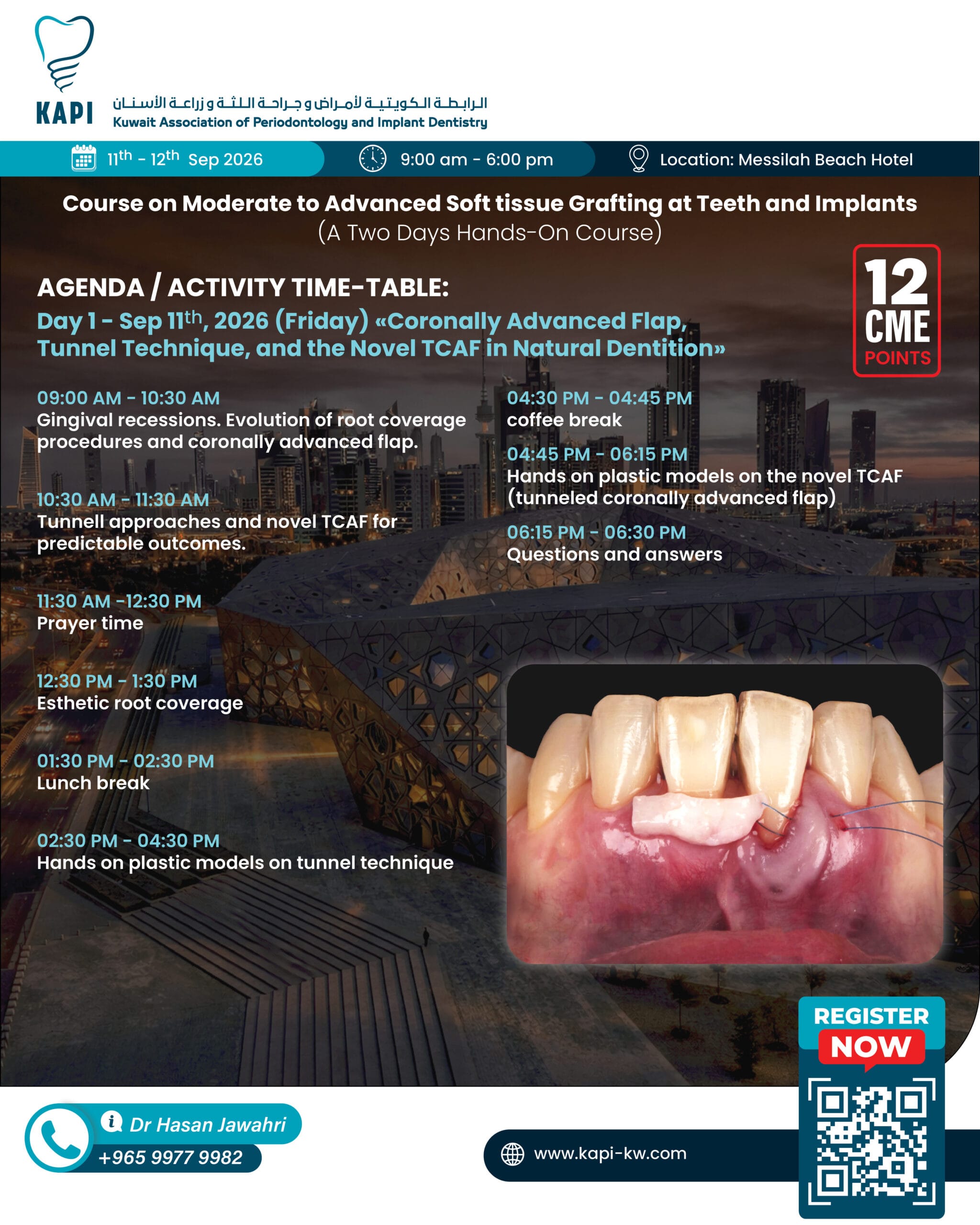
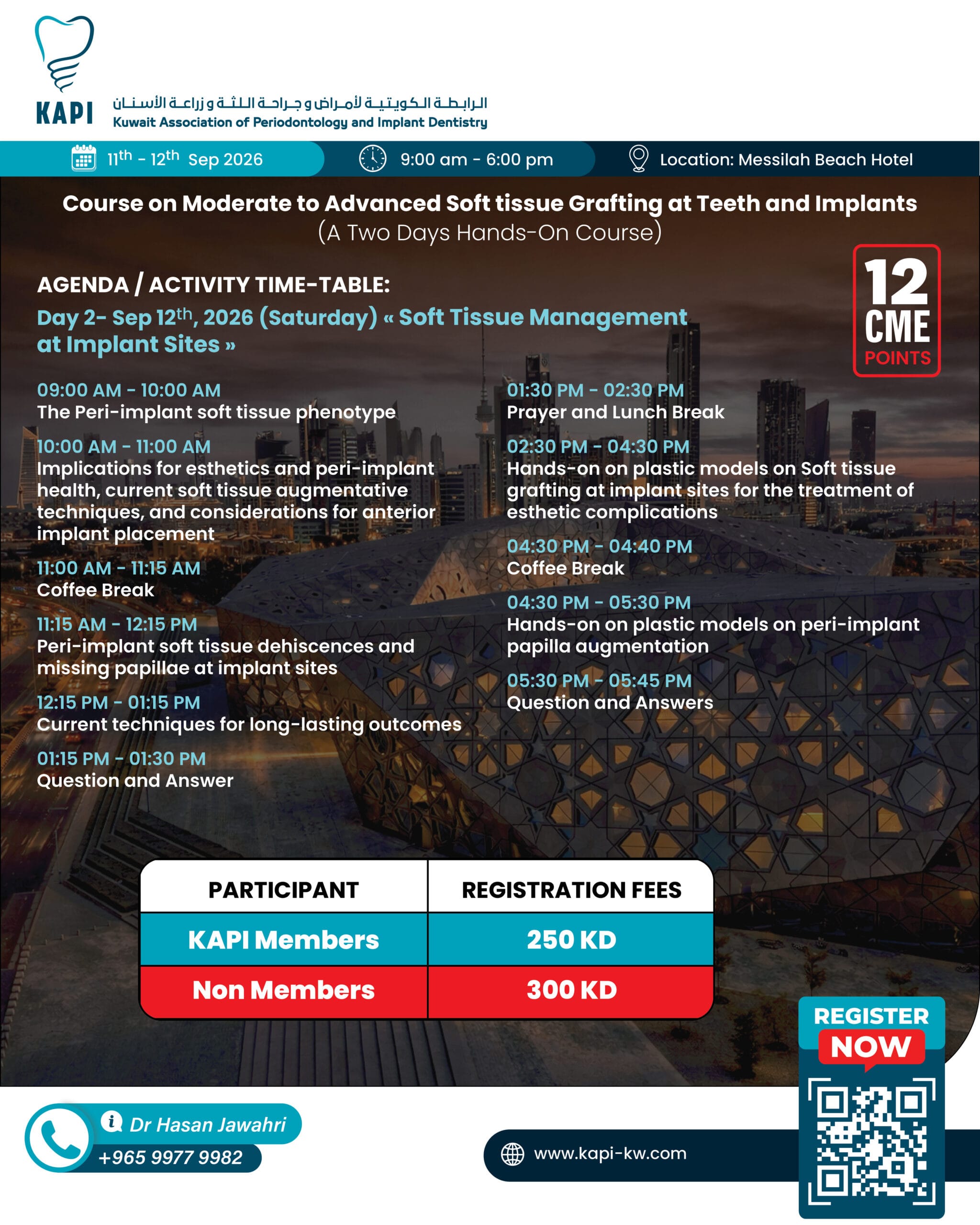
Workshop: Course on Moderate to Advanced Soft tissue Grafting at Teeth and Implants
(A Two Days Hands-On Course)
Course summary
Recent advancements in soft tissue grafting have emphasized minimally invasive, patient-centered approaches across both periodontal and peri-implant contexts. The evolution of root coverage procedures in natural dentition—through techniques such as the coronally advanced flap, tunnel techniques, and the tunneled coronally advanced flap (TCAF)—has significantly refined flap design, graft handling, and surgical precision in esthetically demanding areas. These innovations have not only improved outcomes around teeth but have also directly influenced the development of surgical strategies for managing soft tissue deficiencies at implant sites. Despite the high predictability of dental implant therapy, esthetic complications—particularly in the anterior region—can lead to patient dissatisfaction and compromise the perceived success of treatment. Peri-implant soft tissue dehiscences (PSTDs) and papilla loss are often addressed using autogenous grafts and flap designs adapted from the root coverage techniques originally developed for natural dentition. More recently, advancements in peri-implant soft tissue biology, combined with the integration of biomaterials, biologic agents, and prosthetic pre-conditioning, have expanded the therapeutic armamentarium. In parallel, high-frequency ultrasonography has emerged as a valuable, non-invasive tool for assessing soft tissue phenotype, diagnosing peri-implant conditions, and monitoring healing following surgical interventions. Collectively, these innovations mark a shift toward more individualized, evidence-based, and interdisciplinary approaches to peri-implant soft tissue reconstruction, even in highly demanding esthetic scenarios.
Learning objectives
- To review contemporary surgical techniques for root coverage procedures in natural dentition, with an emphasis on minimally invasive and esthetic outcomes.
- To understand the clinical indications, advantages, and limitations of autogenous grafts and soft tissue graft substitutes
- To evaluate the rationale, indications, and advantages of the novel Tunneled Coronally Advanced flap (TCAF) for soft tissue grafting at teeth and implants
- To understand the main factors associated with implant esthetic complications and their management for achieving long-lasting stable outcomes.
- To review the latest surgical approaches for the treatment of implant esthetic complications and papilla reconstruction.
- To explore the key role of presurgical prosthetic tissue conditioning, and postsurgical prosthetic soft tissue manipulation in enhancing clinical and esthetic outcomes.
For more information please contact

Reviews
There are no reviews yet.